Tuesday, 7 July 2026

TERM 2 2026 - Movement

 MOVEMENT DEFINITIONS:

MOVEMENT BIG IDEAS:


This term we looked at a variety of topics under the concept of movement. 

Hands - We started by looking at hands - how do they move, what do we use them for? We looked at examples of artists who studied hands (Escher, Da Vinci, Durer, Michaelangelo), we looked at hand dominance and tested whether we used our left or right hand more for certain activities, we looked at the mechanisms and science of hands (bones, tendons, muscles) and looked at people who had designed prosthetic hands. 


Animal movement - We looked at how animals move - specifically cats. We looked at members of the cat family and looked at similarities and differences. What does their body language tell us? How are they able to land softly and on their feet? How do they move and why? 

Transport - we thought about how goods are moved around the world. Where do things come from? How do they get to us? This website is fascinating - it shows a real time map of sea traffic around the world.  We looked at historical transport routes such as the silk road and the spice route and how trade routes began. We looked at more modern transport inventions such as the maglev train and electric vehicles (although did you know that electric cars were first created in 1888?!), we made graphs of how vehicles at our homes are powered and discivered that we have more petrol and diesel vehicles than hybrid and electric vehicles. 

Motion in the ocean - for world ocean day we looked at ocean currents, waves etc. We explored how the temperature and salinity of the water effects movement and learnt about 'thermohaline circulation'. We looked at how this ocean movement effects animals and people who use the ocean, as well as rubbish that falls into the ocean. Children enjoyed exploring this website that shows wind, currents etc  We looked at how scientists learnt more about ocean currents when a container with several thousand rubber ducks was washed off a container ship in the middle of the pacific ocean in 1992. The ducks landed on coastlines around the globe, causing scientists to think more about ocean currents. 


Social Movement - groups of people working together to make a change in society. We looked at examples of this in world history - acting out the Rosa Parks story from America, and looking at various movements in NZ - our local Protect Whangaparaoa Rockpools protest and petition that some children have been involved in, the Young Ocean Explorers campaign to write letters to the government asking for more protection for the ocean (several Quest children took part in this), to historical events such as Te Puea Hērangi's fight for Maori rights, and Kate Sheppard's fight for Women's rights to vote. 


Nomads - we looked at people around the world who move around and thought about reasons they might have a nomadic lifestyle - to find food for themselves or their animals, to find work, to travel and explore. We thought of the pros and cons of nomadic life.

Migration - we ooked at animal that migrate - specifically the bar tailed godwit that migrates to NZ each year from Alaska. Again we thought about why animals migrate, looked at scientists theiries and studies about how they navigate, and thought about possible issues for animals that migrate. Tamariki studied other animals that migrate.

Moving pictures - we looked at the origin of 'moving pictures' and optical illusions, and had fun creating flipbooks and thaumatropes. We looked at how technology has changed movie making over the years. Did you know that Toy Story was the first animated feature film that was created with digital animation techniques? That was back in 1995. 
This simple flip book instruction is fun to try - there is definitely an art to it! 


This term's learning has hopefully exposed children to a wide variety of ideas to do with varying aspects of movement. We have challenged ourselves to try new things, research, share ideas, and create interesting new ideas. 

Sunday, 22 March 2026

TERM 1 2026 - Treasure

 We have been exploring the various meaning of treasure this term - what it means to treasure something, what we see as treasure, what others see as treasure.

DEFINITION
something that is very special, important, or valuable 
taonga 

BIG IDEAS
Different things are important to different people
Treasure is not always something tangible (it's not always something you can touch)
What we value depends on circumstances

MEMORIES - we looked at how our brains work and how we remember things. We tested ourselves with some memory tests, and discussed ways that can help us remember things (chunking, mnemonics, finding patterns, repetition, picturing things etc)
We read a delightful picture book 'Wilfred Gordon Mcdonald Partridge' by Mem Fox, which helped us to think of many different memories and opened up some amazing discussions. We thought about how we remember treasured times, places, people, pets. 

GOLD - We acted out the story of King Midas and the Golden touch, and then

thought about the message behind the story. More great discussions on what children find important in life. We also looked at the process of mining or panning for gold and locations of NZ goldrushes in the past, and current gold exploration in NZ. 

THE OCEAN - for sea week we looked at what is important about the ocean, and how we are connected to it. We looked at NZ's EEZ (exclusive economic zone) and how big it is (15 times more sea than land in NZ). We looked at many interesting things about the ocean - including the Kermadec Trench - the second deepest trench in the ocean, which runs between NZ and Tonga. We looked at how people who treasure the ocean are making a difference - using our local 'Protect Whangaparaoa Rockpools' campaign as an example and looking at the new rules brought in after that campaign. Some write letters to the Prime Minister, some created slides about their learning, some explored ocean creatures on the Young Ocean Explorers website. 


ANCIENT EGYPT
 - we got on a plane and went to Egypt (virtually via google maps!) to visit a pyramid. We looked at what the ancient Egyptians had discovered and invented and improved - such as farming techniques, the calendar, maths skills, writing, building etc. Older children had a challenge to solve a hieroglyphic clue to find the treasure, by completing research, maths and a mapping task about ancient Egypt. Younger children measured out the size of the great pyramid (the base is bigger than our entire school!), and had fun measuring in cubits and writing their name in hieroglyphics. 


Saturday, 13 December 2025

Term 4 2025

This term we looked at the concept of 'Order', through a variety of ways. 

Taxonomy - we looked at how living things are classified, and what scientific names can tell us. 


Timelines - we looked at some history of our area and put the events in order.

  • 1200's - Maori people first lived in the area
  • 1877 - one of the first European families to settle in the area was the Polkinghorne family. The bay that was known as Waiau Bay (Tindalls, Big Manly, Swann Beach) was named 'Polkinghorne Bay'. 
  • 1878 - The Akkles family bought land at what is now known as Arkles Bay.
  • 1880's the Shakespear family bought land at the end of the peninsula. 
  • 1902 - Whangaparaoa School started with just 14 children.
  • 1925 - A blue Whale washed up on Orewa beach. We have a vertebrae from that whale (we think) at school! 
  • 1927 - The Hopper family came to Whangaparaoa in 1927 and Ken and Edith took over the store built by William Polkinghorne on the hill between Manly and Arkles.
  • 1952 - The land where Whangaparaoa School is now was purchased from Mr Kenneth Hopper.
  • 1956 - the new school was completed and occupied.
  • 1959-  After much fundraising the swimming pool was built.

Order of merit / awards - we looked at what the NZ order of merit is and what people are awarded it for. We looked at other awards. We talked about how people feel when they get awards, and feeling we have when we see other people get awards. Most of our tamariki were so lovely and supportive and talked about how they feel happy for the person getting the award. It was good to also have a discussion about other feeling that can come up too, such as sadness or jealousy if you were hoping to get that award. Some designed awards for themselves or for others, some researched NZ'ers who had won awards, some created medals, some thought about how else we can recognise people for what they do and/or how they act.


Make an order - running a business

We looked at being an entrepreneur and ideas for a business. We did market research to see if we could make a business with our 3D printed items - which ones are the most popular, what price would we have to sell them for to make a profit? Some created a name and logo idea for our business, some designed other businesses, some researched other products we could 3D print.

Debate

We looked at rules and order of speaking in debates and practiced how to debate effectively (remembering to LISTEN  so that we could give rebuttals too). Some of the older groups debated whether those under 16 should have access to social media (as Australia has recently brought in new rules around this). 


That ends another year of learning lots together and from each other. I love all the ideas and questions that these tamariki have - they really think deeply and have lots of knowledge to share with others. Thanks Quest kids for keeping life interesting! 


Thursday, 25 September 2025

TERM 3 POWER

 In term 3 we looked at power through a variety of lenses.

ELECTRICITY - where does power / electricity come from? What do we use it for? 

PEOPLE POWER - we looked at our personal power / strengths and how working with others can make use of many strengths.

SUPERPOWERS - if you could choose a power to have what would you choose and why? We thought about how kindness is a superpower.

Some children made these cute little superheroes. 


LAUGHTER - we had fun telling jokes and looked at the science behind the power of laughter. Did you know that scientists have found that laughter can help you tolerate more things? It reduces stress and releases endorphins (feel good hormones). 

CARS - we looked at how vehicles are powered and how they might be powered in the future. Some children had fun creating ideas for futuristic vehicles.

THE POWER OF WORDS - we thought of the power different words can have - they can hurt, heal, support, inspire. Some groups had discussions about which words they think are powerful. Here are some of their ideas. 


LEADERSHIP - different people use their power differently. We thought about the kinds of traits we like in leaders, and what makes us want to follow someone. We also talked about traits that good leaders have - passion, knowledge, drive, enthusiasm. 

THE ARTS - music, art, dance, drama can all have the power to evoke emotions, memories. It can help us express our creativity. 

PLANT POWER - we looked at how plants can help us and the planet in a variety of ways - of course by giving us oxygen, food, resources, but also shade, shelter, beauty, and also as a habitat and food for creatures. 


Saturday, 5 July 2025

Planning for the future

 During the last couple of weeks of term 2 we looked at town planning and planning for the future. 

We thought about what makes a town - what do we need and want in a town? Children worked in groups to plan a town. There was lots of discussion about what's important, what is needed in a town. Then I asked them to think about infrastructure - how will they get around in the town? How do they get water, electricity, get rid of waste? Many of them were interested to see just how much thinking has to go on to plan a town.

Here are some of their ideas. 


The following week we started to think of the future. What things do we like and want to keep? What do we think needs improving? What kids of world do we think will be good for our children and grandchildren? 


Wednesday, 21 May 2025

Term 2 SUSTAINABILITY

 This term we are looking at different ideas about sustainability. How can we keep our planet healthy for future generations? 

We looked at people who are champions for the environment with David Attenborough's birthday. We were lucky to have Riley and Steve Hathaway from Young Ocean Explorers come in to talk to our school.


During Primary Science week we looked at the importance of soil and studied soil helth by looking at samples from around our school. Some got to hear from volcanologist Ben Kennedy via zoom and made playdough volcano models. 

We also looked at clothes and sustainability - how can we reduce, re-use and recycle so that clothes do not end up in landfill? 

Term 1 2025 - CONNECTION

 In Term 1 we looked at the concept of CONNECTION in various ways.

We looked at connecting with others (friendships, creating connections, finding common interests). 

For sea week we looked at kaitiakitanga and how we connect with our environment (the importance of the ocean in our lives to help provide oxygen, as part of the water cycle, food, jobs, recreation etc). Some chose to write letters to the Prime Minister to ask for more marine reserves (they were shocked to learn that less than 1% of NZ waters are protected marine reserves). These letters will be presented at parliament, along with other from schools around NZ, by the Young Ocean Explorers team - Riley and Steve Hathaway. Some children picked up rubbish to help clean the environment. 


We designed and made bridges and looked at the different designs to make strong structures to connect places over rivers. 

Lots of fun was had looking at electrical connections and making circuits. Children enjoyed using our brainbox kits and some even had a go with the EPro8 equipment (which will be used later in the year for a year 5&6 competition).


During neurodiversity awareness week we looked at how the connections in our brains work (synapses) and how some people's brains can work in different ways. We looked at strengths of different brain types and different neurodiversities. We looked at famous people who have neurodiversities - did you know that Albert Einstein was gifted and also thought to have dyslexia. 

Teamwork was an important concept to look at - how we can work with others to  problem solve and support each other. 

While looking at all these different topics it is hoped that children can find something that interests them and also to think about some new ideas and get them talking about and understanding themselves a little more. 

Friday, 20 December 2024

2024 highlights

 Another busy and fun year of learning comes to an end. Quest kids had some interesting insights into things they enjoyed about Quest this year when I asked the year 3-6's to fill in a survey. In their words...

  • We learn something new every time we go to quest
  • i love doing the brain work outs at the start and every thing we do
  • the fact that we learn more about history and other things a lot more we do in class
  • All the fun thing to do like :
    The digestive system where we all got to be some type of body part
    and the toilet paper planet mesmerising
  • the arts and crafts and all the secret learning that other people don't know about.
  • getting a class that interests me
  • Is that I can learn new things that I wouldn't in class.
  • friends and learing new things
  • it is a different type of learning at school basically science but you do it every monday so thats what i love
  • That each week we learn about something diffrent
  • That we always do something new and you make every activity fun and interactive and easy to understand as well! You also make it even better by making fun choices to do at the end!! And you have fun activity's/Games/Fidgets to play with too😀😜
  • Challenging my brain
  • we get to share ideas with each other and work together
  • I get to stretch my brain and learn with people with a brain a little like me
  • learning things outside the box of things we wouldn't learn in class.not being bored to death in class.stretching our brains.
  • i always find it interesting and fascinating
  • I learn more and more
    Thanks to quest I'm interested in space I'm writing a book about kids visting a near by galaxy
  • i learn new things and i am challenged more
  • I learn something new everytime i come
  • i am grateful for every quest session
  • i love the quest website
They also gave me constructive feedback on what I should stop doing at Quest...
  • maybe can you please stop talking so much.
  • Please stop getting sick because we miss half the lessons.
  • NOTHING>>QUEST IS PERFECT JUST THE WAY IT IS!! 🤩
Some were concerned about missing things in class so I need to talk to teachers about this next year to ensure they are not missing anything important (I'm pretty flexible if there is something important going on, and can change the time of their Quest class if I know in advance). 

Apart from that we have had a full year learning - focusing on one concept per term, with a different topic linked to that concept each week. We explore examples of how others learn, cope with mistakes, stretch their thinking, wonder, invent, create. So while we are learning we are also exposed to great life lessons and good conversation starters to try and figure out how we learn best. 

TERM 1 CONCEPT - PROGRESS
  • Learning from mistakes
  • Transport
  • Biomimicry (getting ideas from nature)
  • Food
  • Toilets (this seemed to be a favourite!)
  • medicine
  • buildings
  • Communication
TERM 2 CONCEPT - PATTERN
  • forensics

  • architecture
  • break the pattern
  • coding / robotics
  • animal pattern
TERM 3 CONCEPT - SPACE
  • What's out there?
  • Telescopes
  • Rockets and astronauts
  • terraforming
  • Overcrowding
  • rainforests
  • personal space
  • protected spaces - marine reserves
  • designing spaces
TERM 4 CONCEPT - SYSTEMS
  • Welcome to my brain!
  • Body systems - digestion
  • Circular economy
  • Learning systems
And there were many other opportunities for our Quest learners this year too with our special guest speakers:
  • Marine design
  • customs officers
  • army
  • author
  • fossil collector
  • environmentalist / artist / photographer
  • ocean explorer
PLUS other opportunities I coordinated for our year 5&6's:

  • Auckland Writers Festival
  • National Young Leaders Day
  • EPro8 engineering competition
  • Sustainability challenge
Whew! What a year! It is so much fun learning alongside your children. They teach me so much and I love seeing their enthusiasm about their subjects of interest. 

Have a happy and relaxing Summer break. I look forward to what 2025 brings as I continue Quest with those at Whangaparaoa Primary, and I hope those who are moving on take up the opportunities that will no doubt be on offer at their next schools.

Debbie

Tuesday, 6 August 2024

Term 3 - concept - SPACE


We are using the concept of space this term to look at a range of skills and attributes that can help with our learning.

Week 1 - What's out there?

We looked at what we know about space and how we can fnd out. We looked at the importance of
finding trustworthy information - checking that the website or books that we are using are up to date and factual. 

We looked at ways to help us remember facts such as the names and order of the planets. A mnemonic is a good way - a sentence that uses the first letter of each object we are trying to remember.

Eg: My Very Excellent Mother Just Served Us Noodles


Week 2 - Exploring space - telescopes

How do people know what's out in space? 

We looked at the skills of curiosity and problem solving. The first person to use a telescope to look up
at the night sky was Galileo Galilei. He was sentenced to house arrest as he had different opinions to the church at the time, who taught that the solar system was earth-centric. Gallileo observed that the Earth moved too, and suggested that the planets all orbit the Sun. His curiosity led to discoveries, but also to challenges. 

Problem solving had to be used years later when the Hubble Space telescope was launched and it was found that the primary mirror was the wrong shape so took out of focus photos. People persevered and found a fix for that 3 years
later.  And more problem solving skills needed to be used to come up with ideas to get the much larger James Webb Space Telescope into space. This was achieved by folding the components for launch, and unfolding them after it was in space. 

Week 3 - Space travel

We looked at how competition and collaboration have helped humans to increase their knowledge and ability around space exploration. We looked at how competition helps us to improve, looking at how athletes aim high, work hard, and learn from mistakes in the Olympics. And we looked at how the Space race helped America and Russia to come up with new ideas as they tried to be first in many space travel milestones.

Then we looked at collaboration on the International Space Station and thought about how collaboration can help us to learn and grow ideas too - sharing resources and ideas, learning from and alongside others, supporting each other. 


Friday, 7 June 2024

TERM 2 2024 - concept 'Pattern'

 PATTERN


We started this term by looking at our fingerprint patterns and how they can be used for forensic evidence if needed. We noticed the different patterns and features used to identify fingerprints. We learnt about patent (visible) and latent (invisible) prints. We thought about advances in technology with fingerprint scanning. We considered the ethics of fingerprinting - should we fingerprint all people at birth - why / why not? 

We looked at pattern in architecture - how it is used for structure or for aesthetics. We looked at a couple of architects (Gaudi and Hundertwasser) who used their creativity to design aesthetically pleasing buildings. Architects need to be problem solvers and good communicators, as well as being creative. They often work closely with engineers who work out how to make the architects' designs safe and strong. Many children enjoyed designing their own house / bedroom - some used 'Planner 5D' to do this. 

Camouflage patterns can help animals to hide from predators or to sneak up on their prey. We looked at the different types of camouflage - concealing, disruptive, mimicry, disguise. Children had fun trying to find paper 'moths' that were hidden around the room. It was a good test for our observation and persistence skills! Children researched animals that camouflage, or found out about different camouflage uniforms, or designed / drew camouflaged animals. There are some incredible animals out there, such as cuttlefish. 

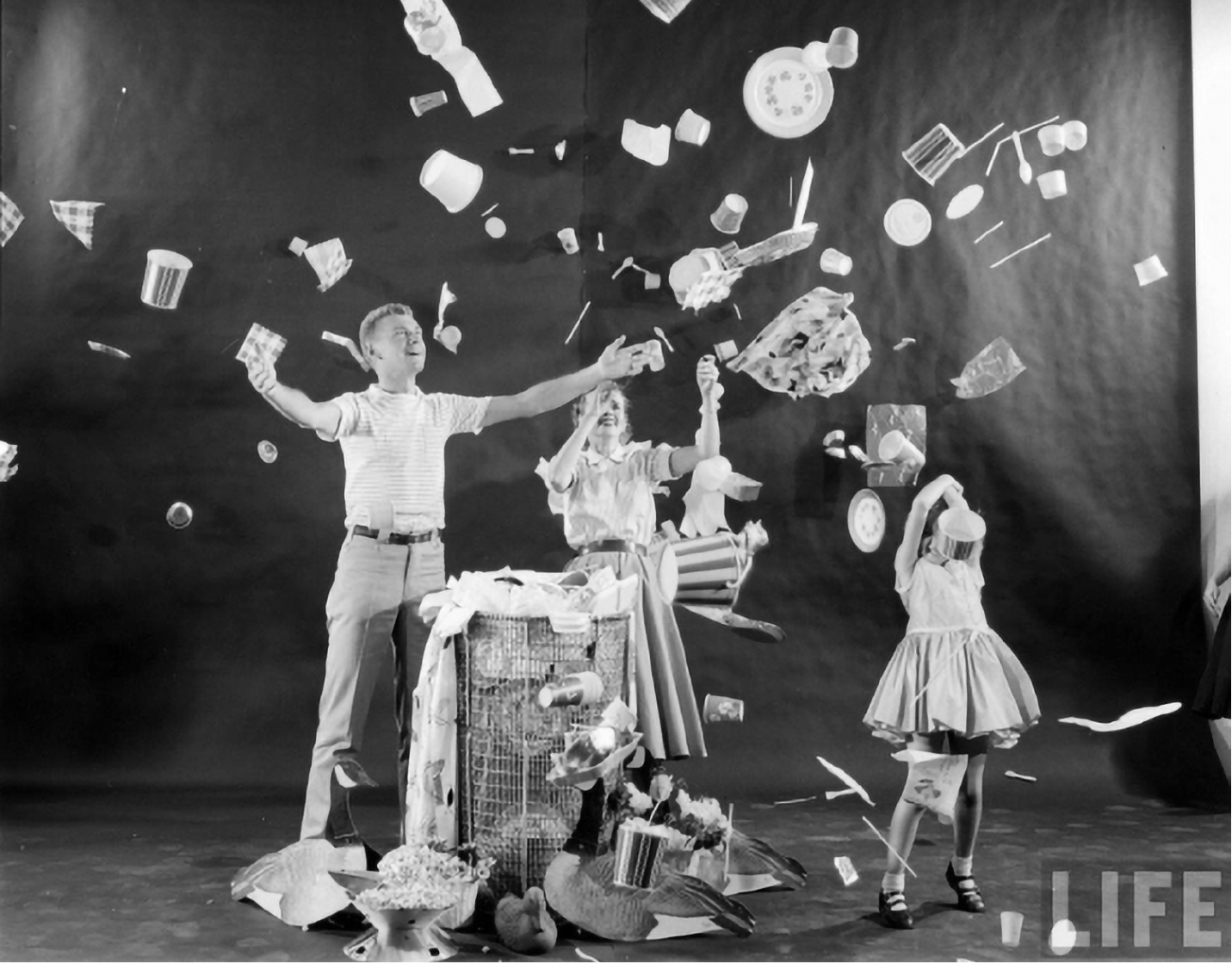
Some groups looked at breaking the pattern - changing our thinking to make a difference. We saw how attitudes to plastic use has changes since the 1950's. We thought about why attitudes had changed. As it was World Ocean Day we looked at the impact of plastic for the ocean, and some ideas people had to make changes. We thought about what the ocean might say if it could talk to us. Some children created slideshows to raise awareness of the amazing things that live in the ocean, or to raise awareness of problems facing the ocean. Some desined ideas to stop rubbish ghoing in to the ocean or to clean up the ocean. 


Here is a photo from TIME magazing in 1955 showing people celebrating the introduction of single use plastic. What has changed since then? When I asked children what they thought was happening in this photo they suggested the people had just done a beach clean or were recycling! How times have changed! Children were horrified when I told them what the photo was actually about. It was a great discussion starter for how our ideas change over time.


Saturday, 13 April 2024

PROGRESS...continued

 More topics investigated this term looking at the concept of progress...


TOILETS - how have they changed over the years and what difference has it made to people's lives. We also looked at problem solving designs such as toilets on the International Space Station. We thought about what possibilities there might be for toilet design in the future - how could we improve the design and function?


BIOMIMICRY - copying ideas from nature. We looked closely at biddy-bids and found out how the idea for velcro came from a scientist studying the burrs that stuck to his dog's fur. We looked at other interesting ideas from nature that have been used to design useful items for people. 


LEARNING FROM MISTAKES - we looked at things that have been invented by mistake such as post-it notes. We also thought about how some mistakes can help us learn and progress. "If you're making mistakes it means you are trying."


TERM 2 2026 - Movement

  MOVEMENT DEFINITIONS: A change in position or location A particular action or way of changing place or position A group or groups of peopl...